The note sits on the frame
The client clicks the timeline and writes there. No more voice notes saying "somewhere near the middle".
 vs
vs

Timecode notes instead of "fix it at 1:24", real versions instead of final_final_2, and approvals that stay on the record.
Drive and a messenger work. The file uploads, the link goes out, the client replies. Nothing to pay for, nothing to learn, everyone already knows how.
It breaks on the third round, when the notes sit between a voice message and a sticker, the final cut is called final_final_2, and six months later nobody can say which master you delivered.
Basalt does not replace your messenger. It takes the one job a messenger is bad at: a note on the frame, a version with an author, an approval on the record, and an invoice on the same project.
 Basalt
 Google Drive and Telegram
This compares the "Drive plus a messenger" workflow, not the quality of either service. Drive stores files well and Telegram delivers messages well.
Do not move everything. Take one project that is live right now and run it through Basalt from first cut to invoice. Leave Drive as the archive: what is there is already there. After two projects the chat stops being where your notes live.
The client clicks the timeline and writes there. No more voice notes saying "somewhere near the middle".

No more final_final_2. You can see what changed between rounds and which cut was approved.

The client opens their own address and sees every project, status and invoice. No link to hunt for.

A finished project turns into a public portfolio page. The next client arrives already convinced.

Notes and versions inside the edit. You never leave the timeline to find out what the client asked for.
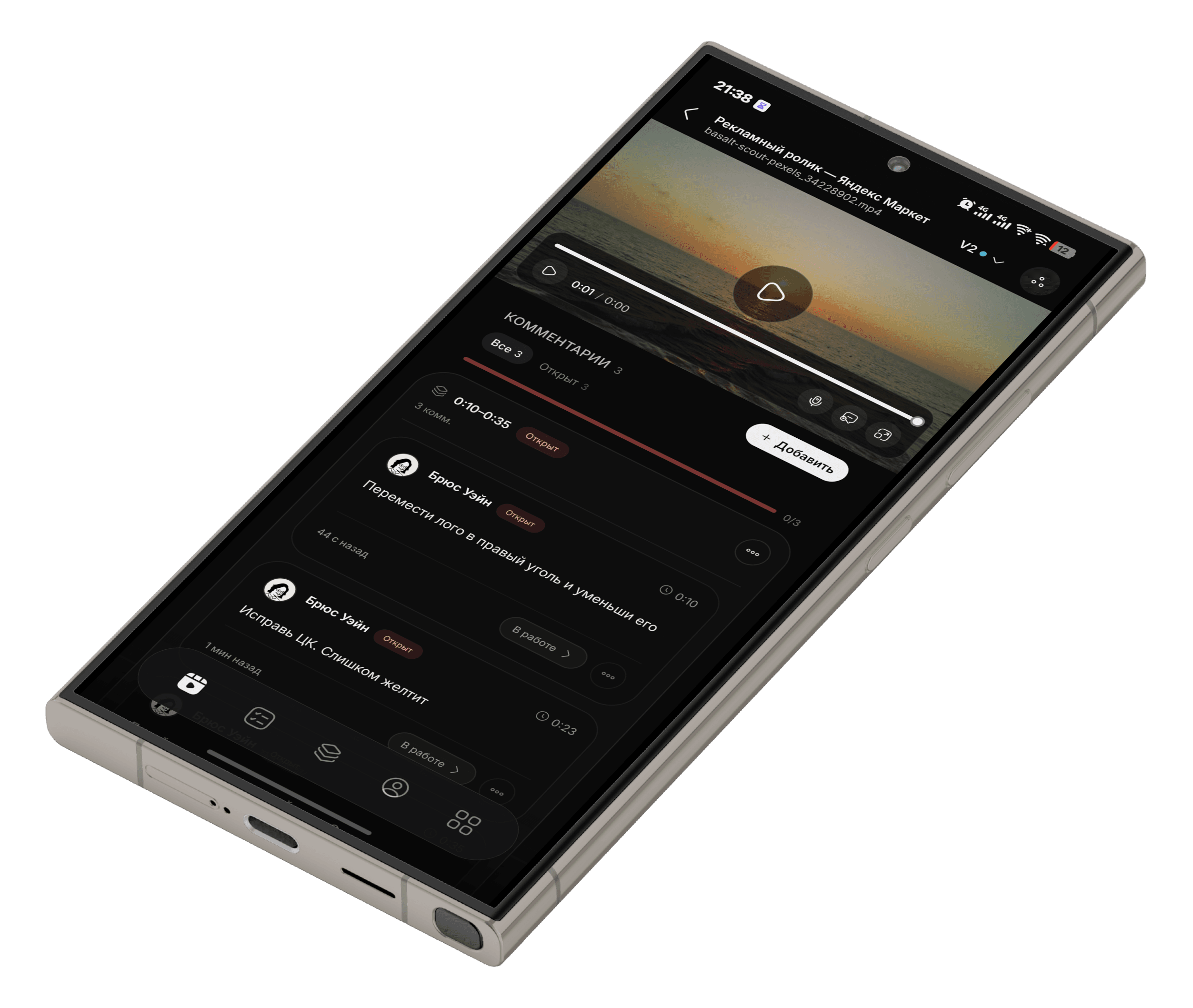
Read the notes and answer the client from your phone. Like a messenger, except it is only about the work.
The five questions that come up most when a studio looks around.
Free plan, no card: two projects, timecode review and a client portal. Drive is not going anywhere.
Start free